
The management of digital identity in Europe has reached a milestone. With the revision of the eIDAS Regulation (eIDAS 2.0), the European Union officially introduces the EUDI Wallet (European Digital Identity Wallet), a single digital wallet recognised across all Member States.
While public debate and national media focus on the impact for citizens (in Italy taking shape as the IT-Wallet), for small and medium-sized enterprises (SMEs) and digital service providers a concrete technical and organizational challenge opens up: preparing to accept and verify European digital identity and electronic credentials ahead of the rollout expected by 2026.
In this article we analyse what changes for businesses, which operational processes will be affected and how to fund the upgrade of company systems through grant financing.
What the EUDI Wallet is and what eIDAS 2 establishes
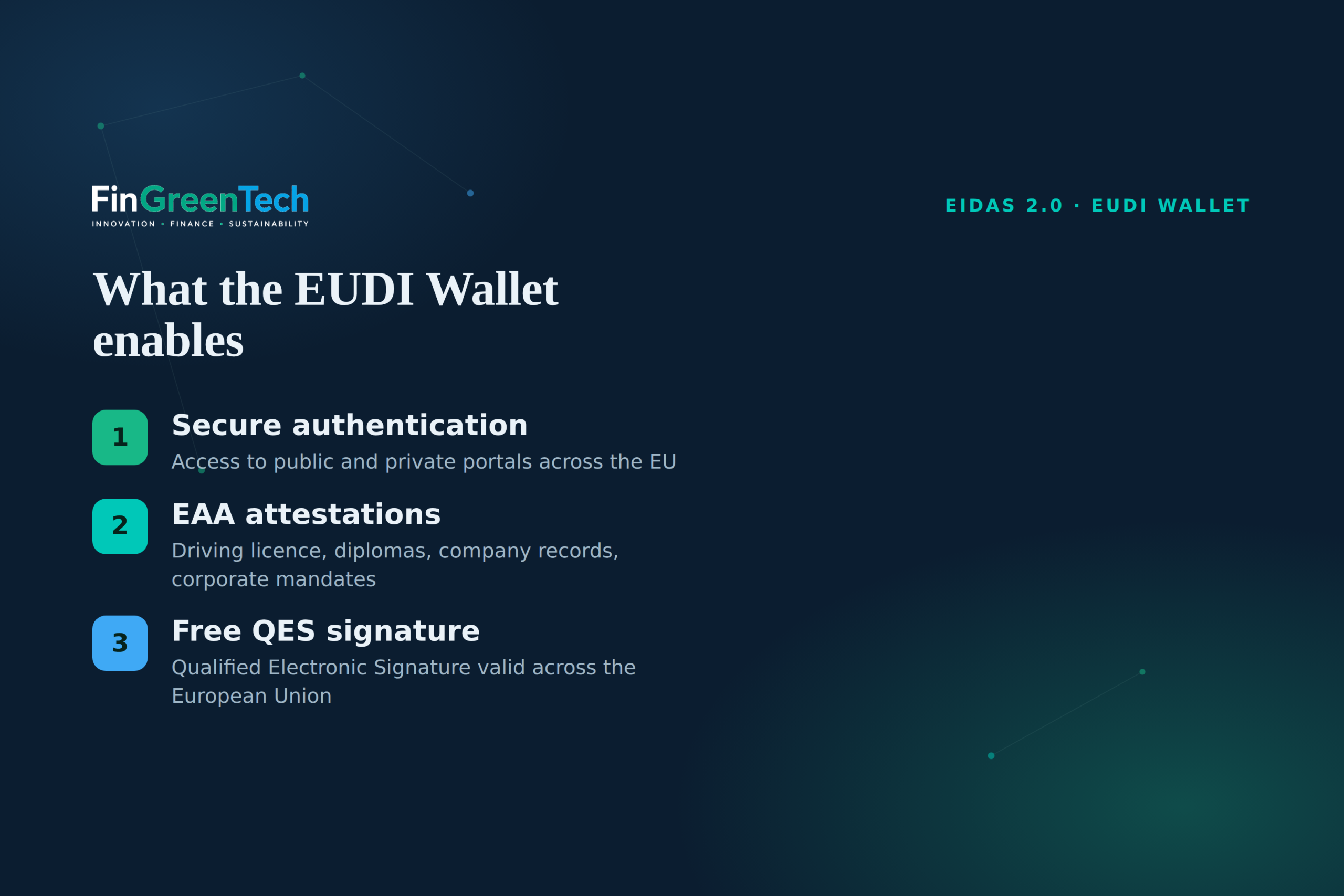
The EUDI Wallet is an EU-standardised smartphone application that will allow EU citizens and residents to:
- Authenticate securely on public and private portals.
- Store and share Electronic Attestations of Attributes (EAA), such as a driving licence, diplomas, company records or corporate mandates.
- Sign electronic documents via a Qualified Electronic Signature (QES) that is free and valid across the European Union.
Unlike the current system based on SPID and CIE, the EUDI Wallet introduces an interoperable, cross-border architecture. This means an Italian SME will be able to authenticate a French or German customer or business partner with the same security guarantees it applies to an Italian user today.
Operational impacts for SMEs and B2B/B2C service providers
The upgrade will not concern the Public Administration alone. Many private-market sectors — including financial services, telecommunications, transport, energy and all e-commerce or SaaS platforms that run authentication or KYC (Know Your Customer) procedures — will progressively prepare to operate as Relying Parties. The obligation to accept the wallet is being phased in, starting with large operators and regulated sectors.
For a company, preparing for the EUDI Wallet means upgrading its software infrastructure on several fronts:
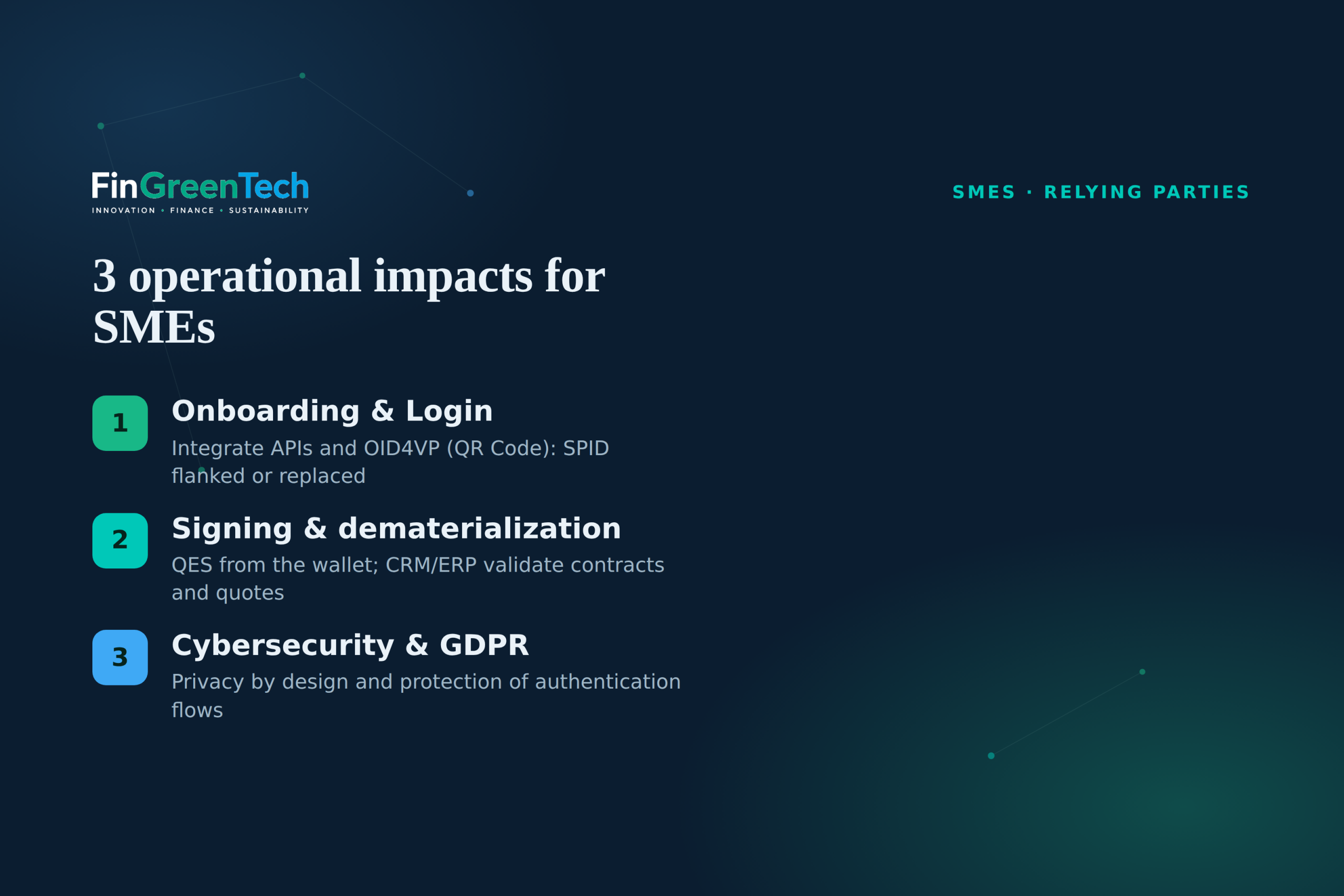
1. Adapting Onboarding and Login procedures
Web portals and business applications will need to integrate the APIs and cryptographic libraries required to communicate with the digital wallet. The classic authentication flow with credentials or SPID will have to be flanked (or replaced) by scanning a QR Code / secure OID4VP (OpenID for Verifiable Presentations) connection.
2. Contract digitalization and dematerialization
The ability for users to apply a Qualified Electronic Signature directly from the Wallet eliminates the cost of old remote-signature kits or smart cards. Business systems (CRM/ERP) will need to be set up to automatically validate the legal validity of contracts, quotes and documents signed via the European wallet.
3. Cyber Security and GDPR compliance
The eIDAS 2.0 architecture requires very high cybersecurity standards. Servers that receive and verify user attributes will have to guarantee the protection of personal data (privacy by design) and be protected from cyber threats or breaches of the authentication flows.
How to fund the upgrade of company systems
Upgrading the IT infrastructure, the security audit of business software and the consultancy for regulatory compliance represent a strategic investment in the company’s digitalization.
SMEs can cover a significant share of these costs by drawing on national and regional incentives dedicated to the digital transition and cybersecurity:
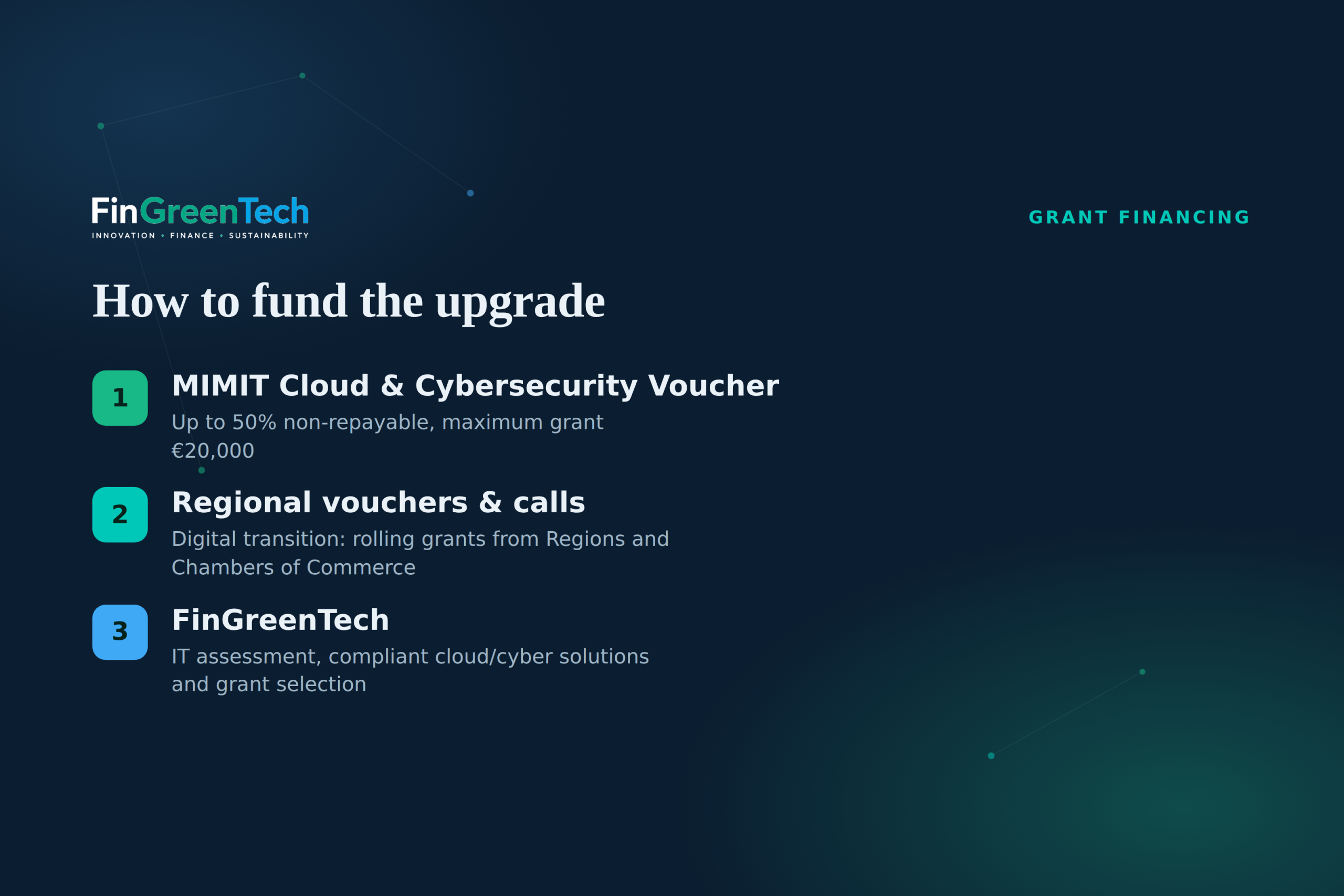
- MIMIT Cloud & Cybersecurity Voucher: a non-repayable grant of up to 50% of eligible costs (maximum contribution €20,000) for SMEs and professionals, for adopting secure cloud solutions, upgrading business systems and securing IT infrastructure.
- Regional Vouchers and Calls for the Digital Transition: rolling grants promoted by Chambers of Commerce or Regions, supporting specialist consultancy and the development of advanced digital platforms.
How FinGreenTech supports you
Strengthening cybersecurity and digitalizing workflows means protecting the value of your company and ensuring full regulatory compliance.
FinGreenTech SRL Società Benefit supports companies in assessing their existing IT infrastructure, designing cloud and cybersecurity solutions compliant with European regulations, and identifying the most suitable grant-financing calls to reduce investment costs.
Request a consultation with our experts to assess your company’s digital maturity and plan your compliance with the new European regulations, or write to us at info@fingreentech.com.
Transparency note. This article was drafted with the support of artificial intelligence tools and reviewed by the FinGreenTech Team, which holds editorial responsibility. Information on grants and incentives is provided for general guidance: the official public notices always prevail for each specific case.